Sustainability Approach For The Australian Islamic House Project
At Edmondson Park, Sydney
Australian Islamic House
Designed by Leyla Baydar Guven
M. Arch. Architect – Interior Designer
Master of Design Science – Sustainable Design – USYD
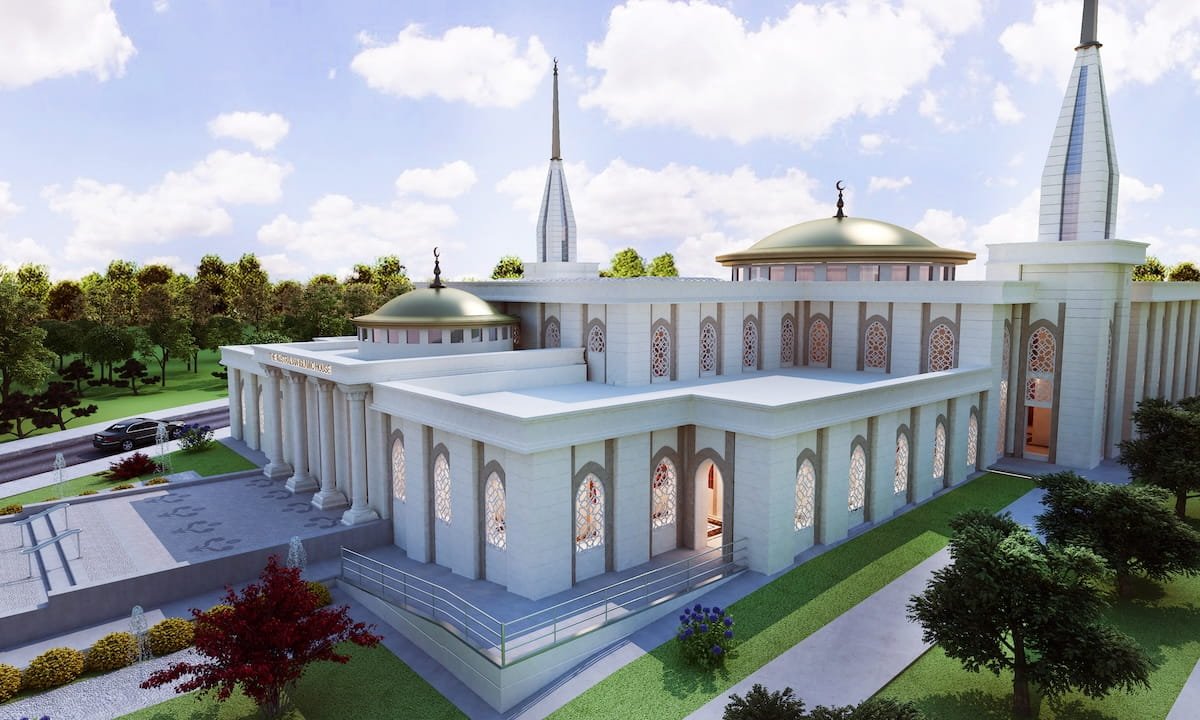
The Australian Islamic House is a major architectural project at Edmondson Park in South Western Sydney, conceived as both a place of worship and a work of enduring architectural vision. Located at 2094 Camden Valley Way within the City of Liverpool, and set on a site of 2.877 hectares, the project establishes a strong civic, spiritual, and cultural presence within its wider setting.
An Architectural Vision
Designed by Leyla Baydar Guven, an overseas qualified architect and interior designer with a Master of Design Science in Sustainable Design from the University of Sydney, the Australian Islamic House reflects a notably unified design approach. The same architect’s authorship across both architecture and interior design gives the project a coherent character in which exterior form, interior atmosphere, material language, and spatial transitions are shaped as parts of a single vision. In this sense, the work approaches a total work of art, where each element contributes to the clarity, consistency, and integrity of the whole.
A key reference in the project’s architectural background is the Faisal Mosque in Islamabad by the Turkish architect Vedat Dalokay.
That connection is meaningful not as imitation’s of the design, but as part of a wider design lineage shaped by clarity, symbolism, restraint, and spiritual purpose. The Australian Islamic House may therefore be understood as a contemporary reinterpretation of the classical Ottoman mosque tradition.
This direction is further informed by Leyla Baydar Guven’s early professional experience as an assistant architect to Vedat Dalokay between 1981 and 1982, a period that deepened her engagement with contemporary Islamic architecture and with the relationship between traditional forms such as domes and arches and modern materials, technologies, and design thinking.
Implementation of Sustainability to the Mosque
Sustainability forms a central part of the project’s architectural thinking. Traditional architectural, spiritual, and cultural values are brought together with contemporary energy-efficient design strategies through several key principles:
- Cultural and Spiritual Integration: Sustainability is approached as part of a broader architectural and cultural framework in which environmental responsibility, spiritual meaning, and cultural continuity remain closely connected.
- Adopting a Sustainable Architecture Methodology: The design follows a sustainability-oriented methodology that aligns long-term environmental performance with functional planning, coherent form, and clarity of use.
- Using Renewable Energy: Solar panels support a cleaner and more forward-looking energy strategy for the project.
- Applying Water Conservation: Rainwater harvesting and water recycling contribute to more responsible and efficient water use across the site.
- Integrating Smart Technology: LED lighting and motion sensors improve energy efficiency and reduce unnecessary consumption in daily operation.
- Focusing on Community Education and Action: Sustainability is also understood as a shared social responsibility, encouraging greener habits and more environmentally conscious ways of living.
- Green Roof Possibility: Concrete roof surfaces create the possibility of a future green roof strategy, subject to structural evaluation.
These strategies matter because sustainability is not treated as an isolated technical layer. It is integrated into the wider architectural vision of the project, linking environmental thinking with values, everyday use, and collective responsibility.
A Project of Lasting Significance
Taken together, these architectural, cultural, and environmental dimensions present the Australian Islamic House as a work of continuity and long-term value. It is shaped by authorship, discipline, and a thoughtful relationship between tradition and contemporary practice. Grounded in place, informed by experience, and directed toward lasting civic, spiritual, and environmental significance, it stands as a meaningful architectural work within contemporary Australia.
For readers who would like to explore the project in greater depth, the main text on the Australian Islamic House offers a fuller architectural reading, including its authorship, spatial composition, symbolic language, and wider public significance. That broader text continues the discussion beyond this introductory overview and opens the way to a more detailed understanding of the project as architecture.
Australian Islamic House: A Contemporary Mosque
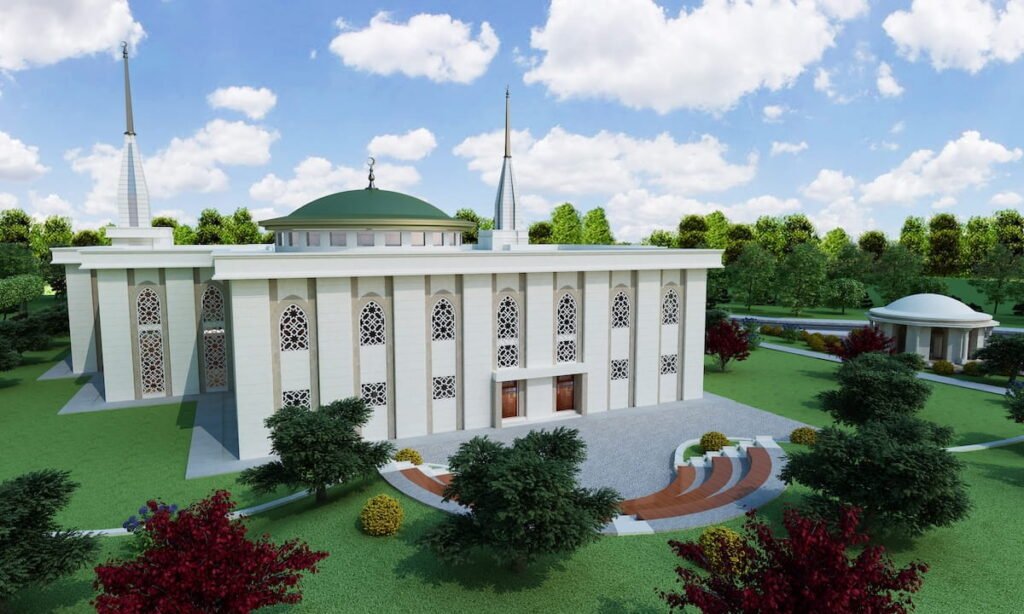
This article presents the Australian Islamic House as a contemporary mosque shaped by architectural clarity, spiritual purpose, and strong design authorship. It traces the project through its long development history, its community role within Edmondson Park, and its careful orchestration of threshold, procession, and prayer. For a deeper understanding of the project’s architectural meaning and authorship, read the main essay.