This section brings together the main article on the Australian Islamic House and 10 closely related companion texts, each examining a distinct architectural dimension of the project. Taken together, they offer a structured and layered reading of the mosque’s design, spatial logic, exterior language, interior atmosphere, communal life, landscape setting, and construction history.
To understand the Australian Islamic House as a whole, the sequence of reading on this page is important and should be followed in the order presented.
The opening article establishes the project’s overall architectural meaning, authorship, civic role, and symbolic framework. The texts that follow then deepen that understanding step by step. They move from the architecture of approach and arrival to threshold and preparation, then to the main spaces of worship, and finally outward again toward enclosure, climate-responsive design, community life, everyday care, landscape, and the longer design and construction process.
This progression matters because the building is not defined by isolated features, but by relationships between exterior and interior, movement and stillness, ritual use and public life, symbolism and practical function. Read in this order, the project can be understood with greater clarity, depth, and architectural coherence.
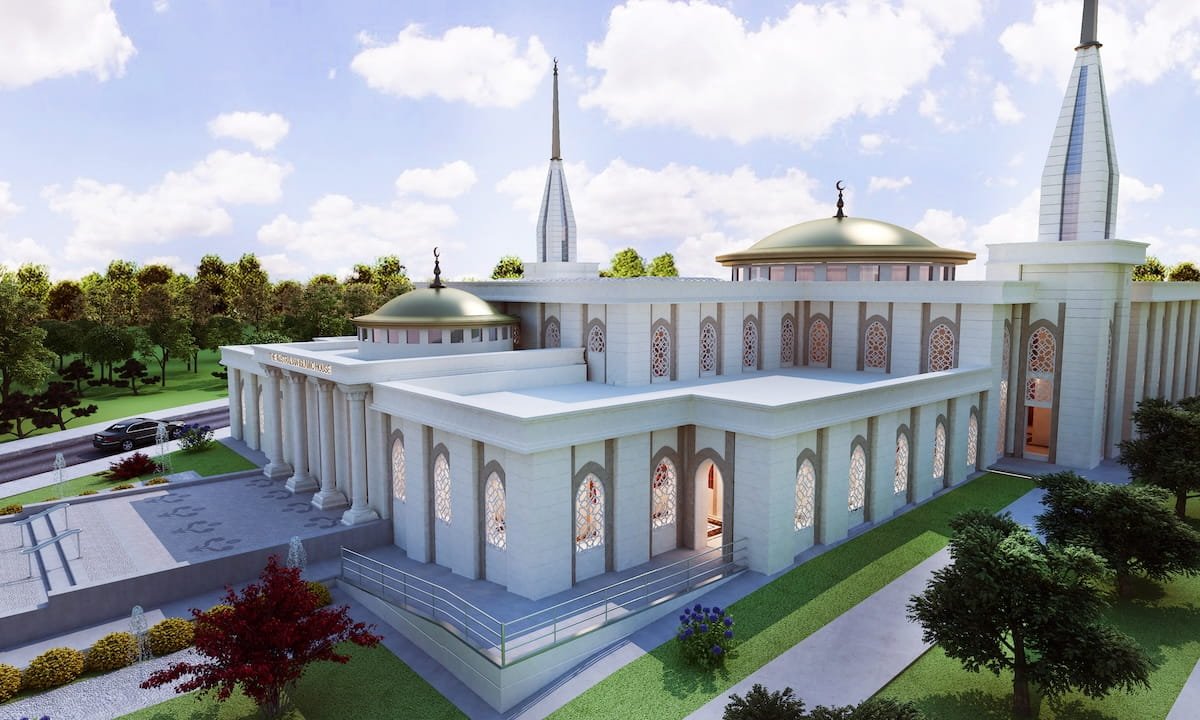
This article presents the Australian Islamic House as a contemporary mosque shaped by architectural clarity, spiritual purpose, and strong design authorship. It traces the project through its long development history, its community role within Edmondson Park, and its careful orchestration of threshold, procession, and prayer. It also situates the building within a broader architectural lineage, showing how traditional Islamic forms are reinterpreted through a contemporary language while remaining grounded in civic presence, symbolic meaning, and enduring communal value. For a deeper understanding of the project’s architectural meaning and authorship, read the main essay.
Entry Portal, Minarets, Parking and the Architectural Approach
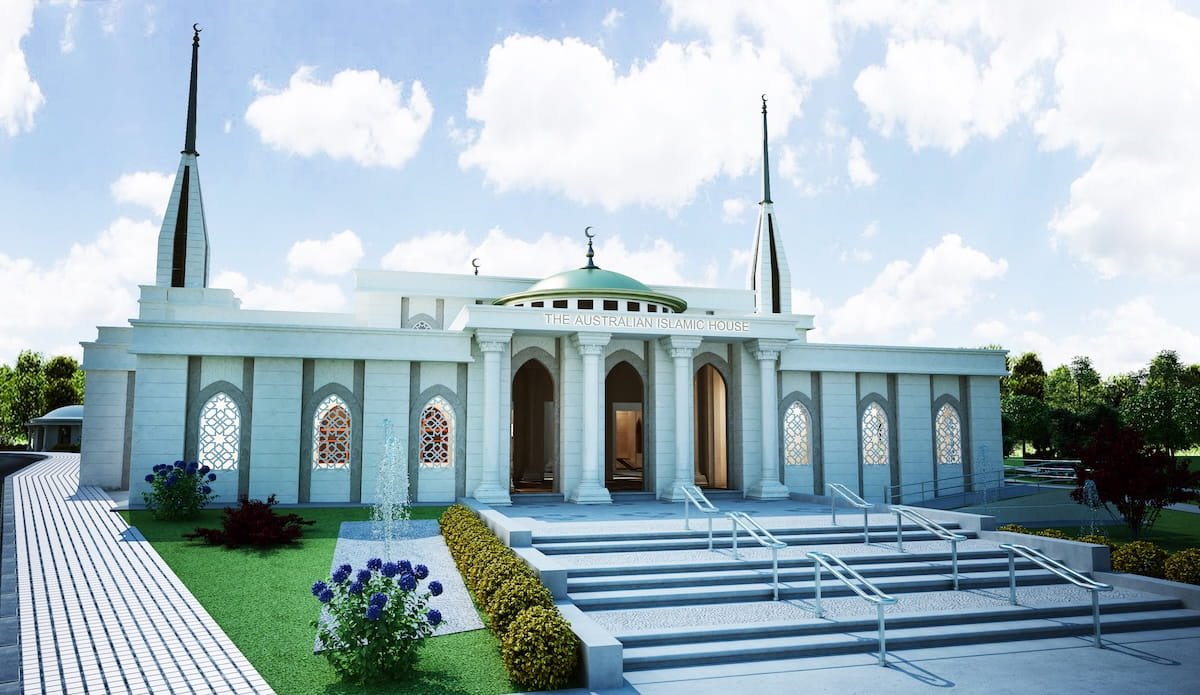
This article examines how the Australian Islamic House establishes its public architectural identity through the careful relationship between the entry portal, the minarets, and the wider site arrangement. It shows how the riwaq shapes arrival as a measured spatial experience, how the minarets combine symbolic presence with structural and compositional balance, and how parking, accessibility, and phased site planning extend architectural order into everyday public use. Together, these elements reveal an exterior architecture that does more than present an image: it organizes approach, gives dignity to entry, and expresses the mosque’s civic, spiritual, and communal role with clarity. To explore the architecture of arrival in greater depth, continue to the detailed reading.
Domes, Ramp, and the Architecture of Accessible Arrival
This article explores how the Australian Islamic House brings symbolic form, contemporary reinterpretation, and inclusive access into a single architectural composition. By focusing on the main dome, the smaller entry dome, and the accessible ramp, it shows how the building moves from image to use, from ceremonial presence to everyday dignity. Together, these elements reveal a mosque in which traditional architectural language is carefully reworked through modern materials, environmental thinking, and a clear commitment to accessible public arrival. To see how symbolic form and inclusive access come together, explore the full text.
Transition Courtyard and the Interior Architecture Designed for Preparation
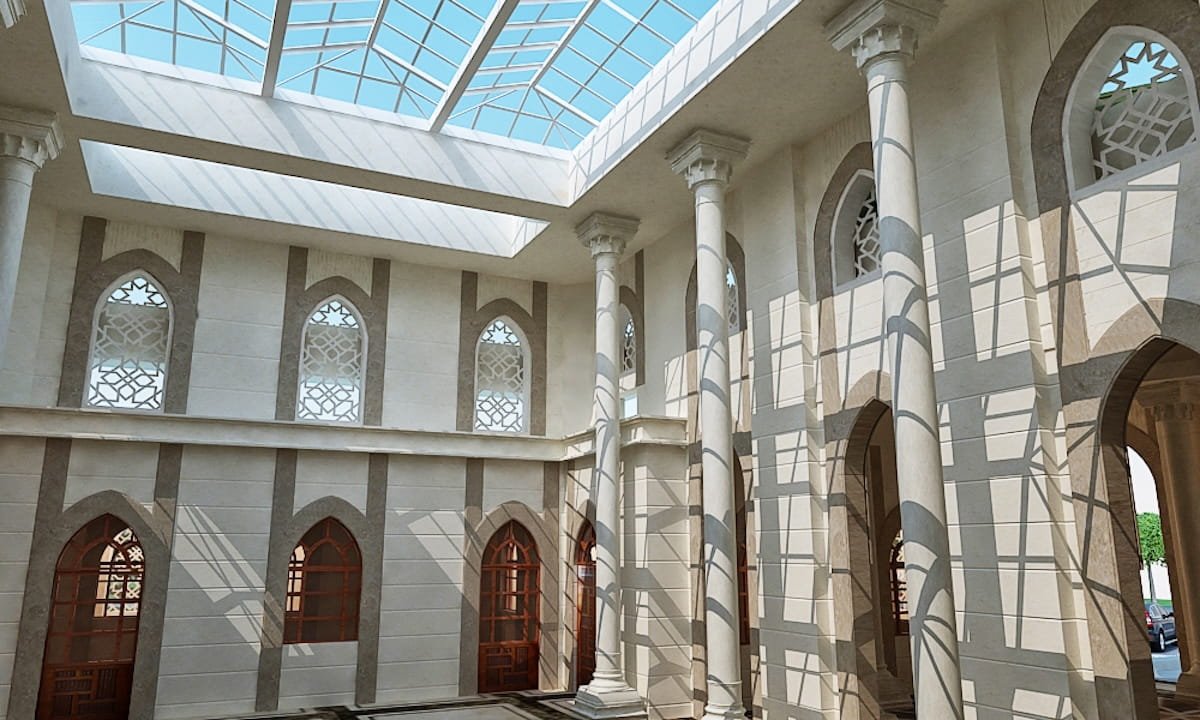
This article turns to the quieter interior architecture of the Australian Islamic House, focusing on the spaces that prepare movement, gather light, and shape the transition toward prayer. Through the internal courtyard, the multi-functional transition entrée, and the internal balcony, it shows how circulation, environmental control, administration, and devotional preparation are brought into a single ordered sequence. The result is an architecture of threshold and calm, where sacred atmosphere is not announced all at once, but carefully built through light, pause, enclosure, and gradual inward movement. To follow this interior sequence more closely, read the full reading.
Men’s Prayer Hall, Qibla Wall, and the Interior Language of Focused Worship
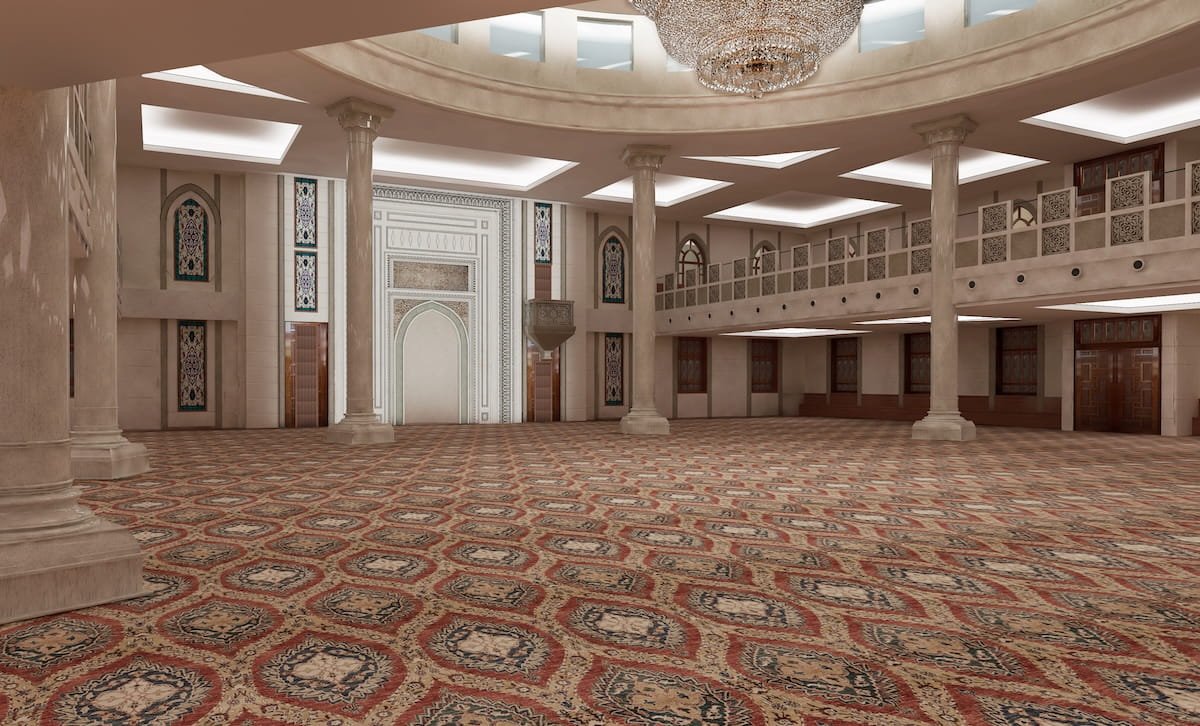
This article examines one of the most focused interior dimensions of the Australian Islamic House, showing how the men’s prayer hall, the qibla wall, and the mihrab and mimber work together to shape an architecture of stillness, orientation, and collective worship. It highlights the hall’s calm spatial order, its layered use of light, ventilation, and climate moderation, and the restrained design language through which traditional Islamic elements are reinterpreted in a contemporary form. The result is an interior shaped not by excess, but by clarity, proportion, and a disciplined devotional atmosphere. To examine this architecture of worship in greater depth, continue to the full article.
Female Entry, External Walls, and the Architecture of Dignified Enclosure
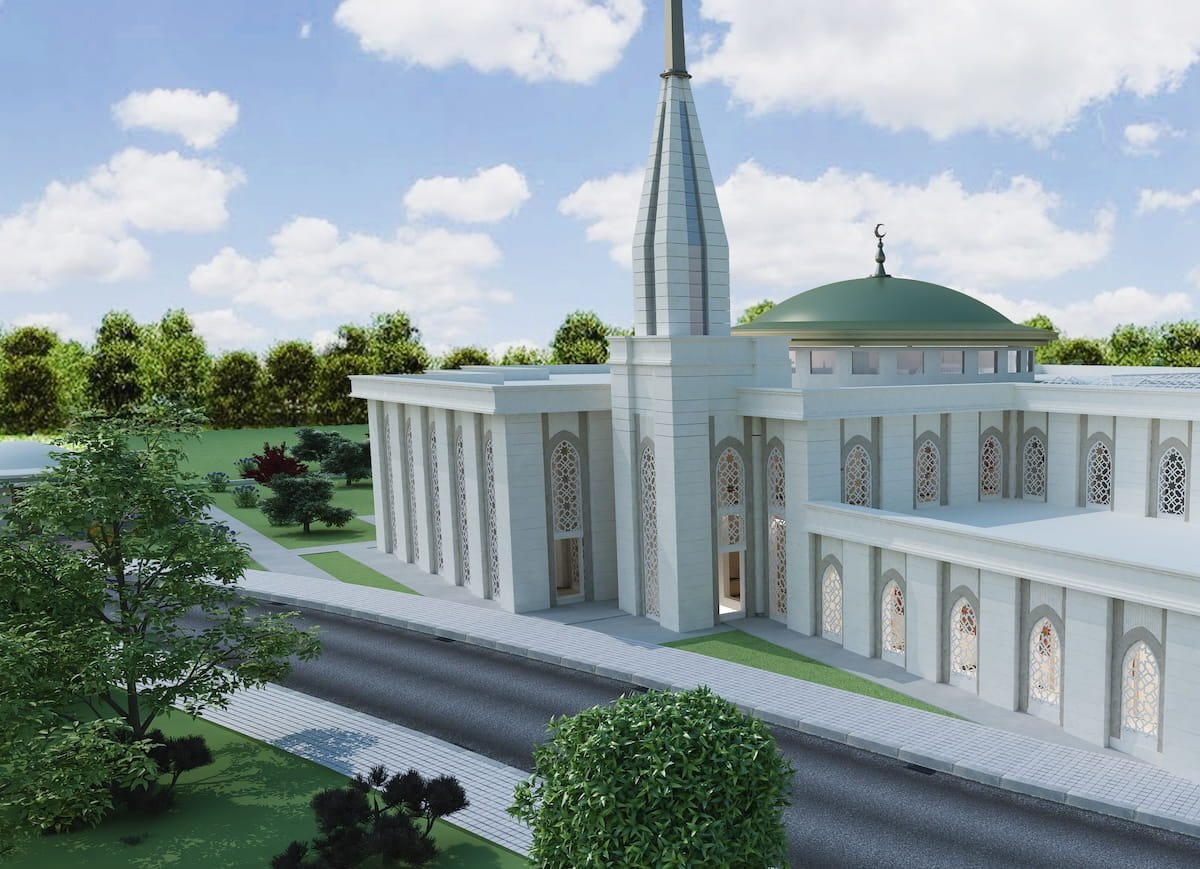
This article explores how the Australian Islamic House handles privacy, access, and exterior identity through the relationship between the female entry, the external walls, and the mashrabiya screen system. It shows how women’s circulation is treated with clarity, dignity, and accessibility, while the facade develops a calm architectural language through stone cladding, repeated openings, and environmentally responsive shading. Together, these elements reveal a building in which enclosure is never merely protective, but also symbolic, climatic, and carefully integrated into the mosque’s wider architectural order. To understand this relationship between privacy, access, and facade more fully, read the detailed article.
Masharabiyas, Riwaq, and the Climate-Responsive Language of the Exterior
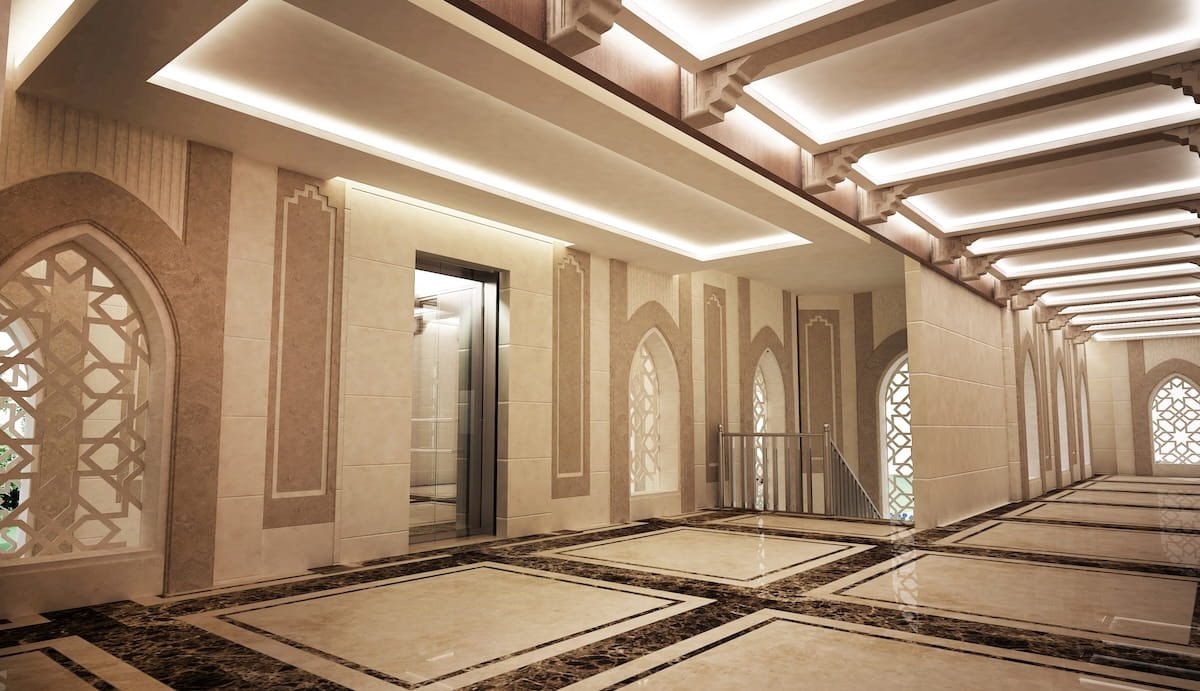
This article explores how the Australian Islamic House develops a climate-responsive exterior language through the relationship between the mashrabiya, the riwaq, and the wider system of light-colored stone cladding, airflow, and shaded circulation. It shows how the outer envelope does more than define appearance, becoming instead a coordinated architectural field that regulates light, supports ventilation, protects privacy, and extends the mosque’s spatial presence outward. Through this interplay of corridor, screen, and material continuity, the exterior emerges as a calm and carefully ordered expression of environmental intelligence, ceremonial movement, and contemporary Islamic design. To explore this climate-responsive exterior language further, see the full text.
Women’s Prayer Hall, The Community Life of the Upper Level and Fire Safety
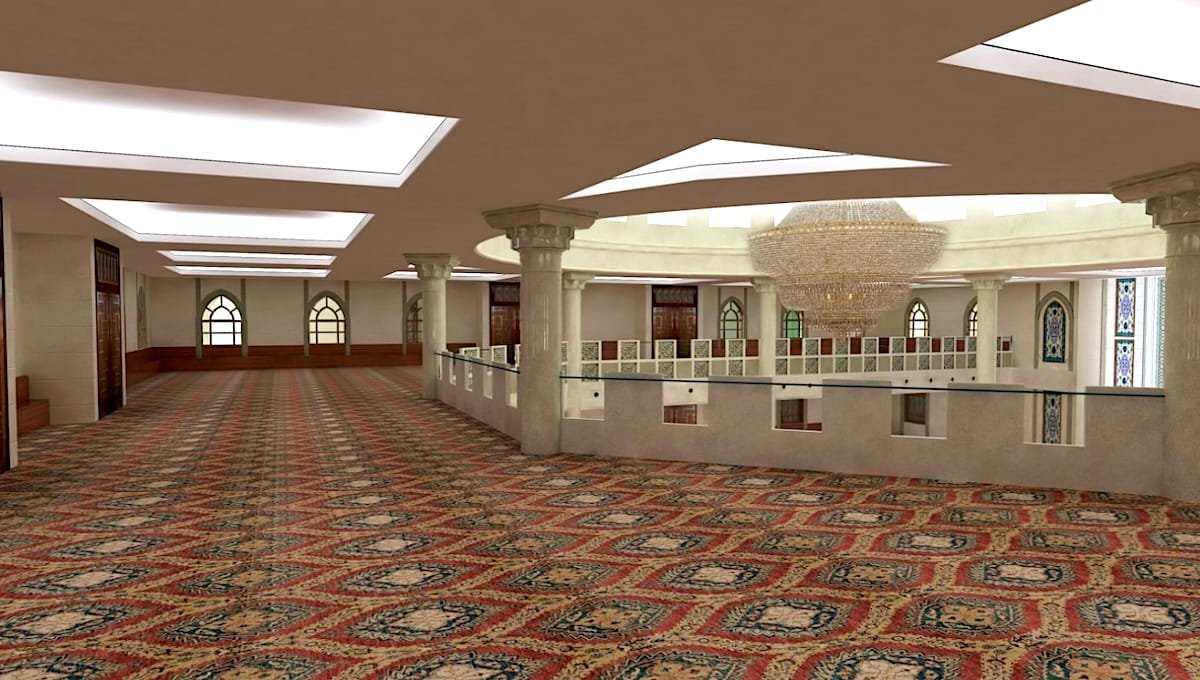
This article turns to the upper levels of the Australian Islamic House, showing how women’s worship, community life, and fire safety are brought into a single architectural framework shaped by care, inclusion, and everyday use. It highlights the women’s prayer hall as a calm and fully integrated upper-level space, the surrounding community rooms as an extension of the mosque’s social and educational role, and the fire safety strategy as an essential part of the building’s responsible design. Together, these elements reveal an architecture in which protection, hospitality, accessibility, and communal support are given clear and durable form. To learn more about these upper-level spaces, read the extended reading.
Ablution, Sanitary Design, and the Architecture of Everyday Care
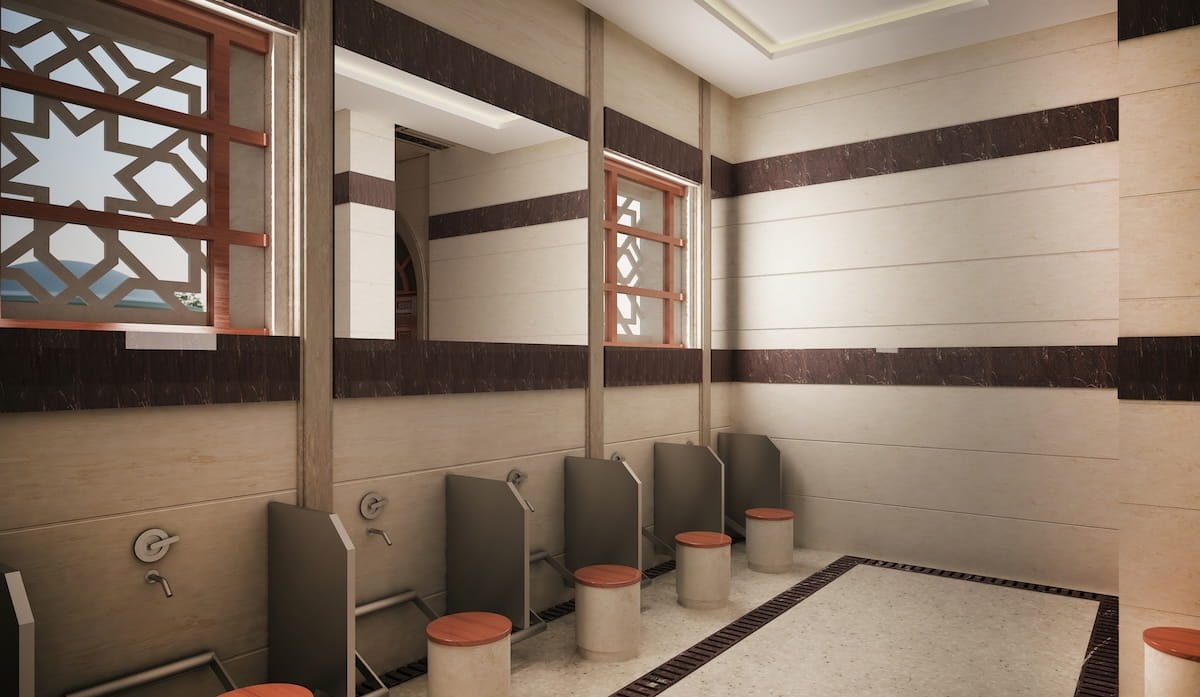
This article turns to the service spaces of the Australian Islamic House, showing how ablution, sanitary design, and care-taking facilities are treated as integral parts of the mosque’s architectural and spiritual life. It highlights the way hygiene, privacy, accessibility, and calm material order are brought together through separate circulation, natural ventilation, daylight, and step-free access across both ground and upper levels. In doing so, the text reveals an architecture of everyday care, one in which even the most practical spaces are given dignity, clarity, and a fully considered place within the larger life of the building. To explore this architecture of everyday care in greater depth, continue reading here.
Fountain, Amphitheater, and the Landscape of Gathering
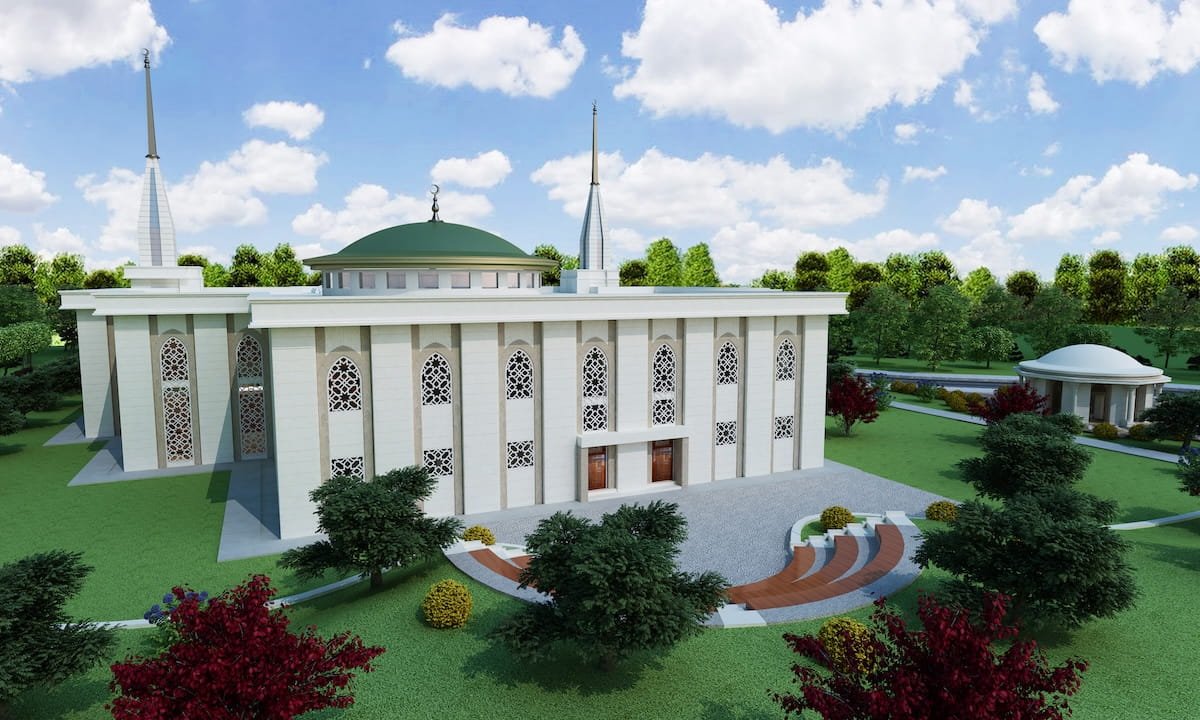
This article turns outward to examine how the Australian Islamic House gives architectural form to gathering, purification, and shared outdoor life through the fountain, the landscaped amphitheater, and the wider system of paths and green spaces. It shows how the site is shaped not simply as a setting around the mosque, but as an active exterior environment where ritual preparation, community use, accessibility, and landscape design are brought into close relationship. Together, these elements reveal an outdoor architecture of care, one in which the mosque’s civic and spiritual presence extends meaningfully into the terrain that surrounds it. To follow this landscape of gathering more closely, read the complete article.
Design and Construction Process

This article traces the Australian Islamic House through its long design and construction process, revealing a project shaped by continuity, collaboration, and sustained architectural oversight rather than by a single moment of completion. It highlights the building’s staged development, the architect’s ongoing involvement during construction, and the later refinements that gave further clarity to its form, approach, and public presence. Read in this way, the mosque emerges not only as a finished building, but as a carefully guided architectural work carried from early concept into lasting built form. To trace the project from concept to built form, explore the full study.