The design and construction process of the Australian Islamic House reveals a project shaped not only by architectural intention, but by continuity, collaboration, and long-term commitment. Rather than emerging through a single act of completion, the building took form through planning, approvals, technical coordination, site supervision, staged construction, and later refinement. Read in this way, the project can be understood as an architecture carefully carried from concept into built form.
From Commission to Architectural Framework
- The design process began in 1997, when the Australian Islamic House Management Committee commissioned the project.
- A development application determination followed on 4 January 2000.
- From the outset, the approved scheme was organised as a three-stage development:
- Stage 1: the main mosque building and fountain
- Stage 2: the meeting hall
- Stage 3: the classrooms
- This staged structure is important because it shows that the project was never conceived as a single prayer building alone. From the beginning, it belonged to a broader architectural and civic vision.
Design Process and Architectural Intent
During the design period, several core dimensions of the project were developed together:
- Site Planning
- Functional Programming
- Key Architectural Elements, including:
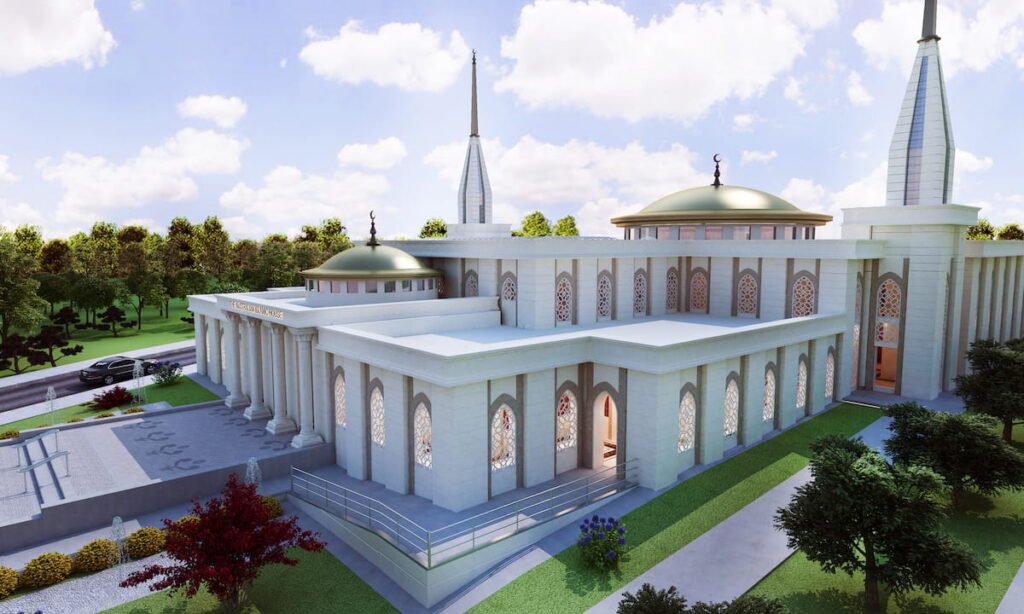
- the mihrab
- minarets
- the dome
- the courtyard
- the ablution area
- Aesthetics and Symbolism
- Design Philosophy
These aspects were not treated as separate concerns. They were shaped in relation to spiritual requirements while also taking local Australian culture into account. The result is a mosque design that brings together traditional Islamic principles and a modern architectural language in a manner that is both grounded and carefully resolved.
Construction as Ongoing Architectural Work
The surviving site records are especially valuable because they show that construction remained closely tied to architectural oversight:
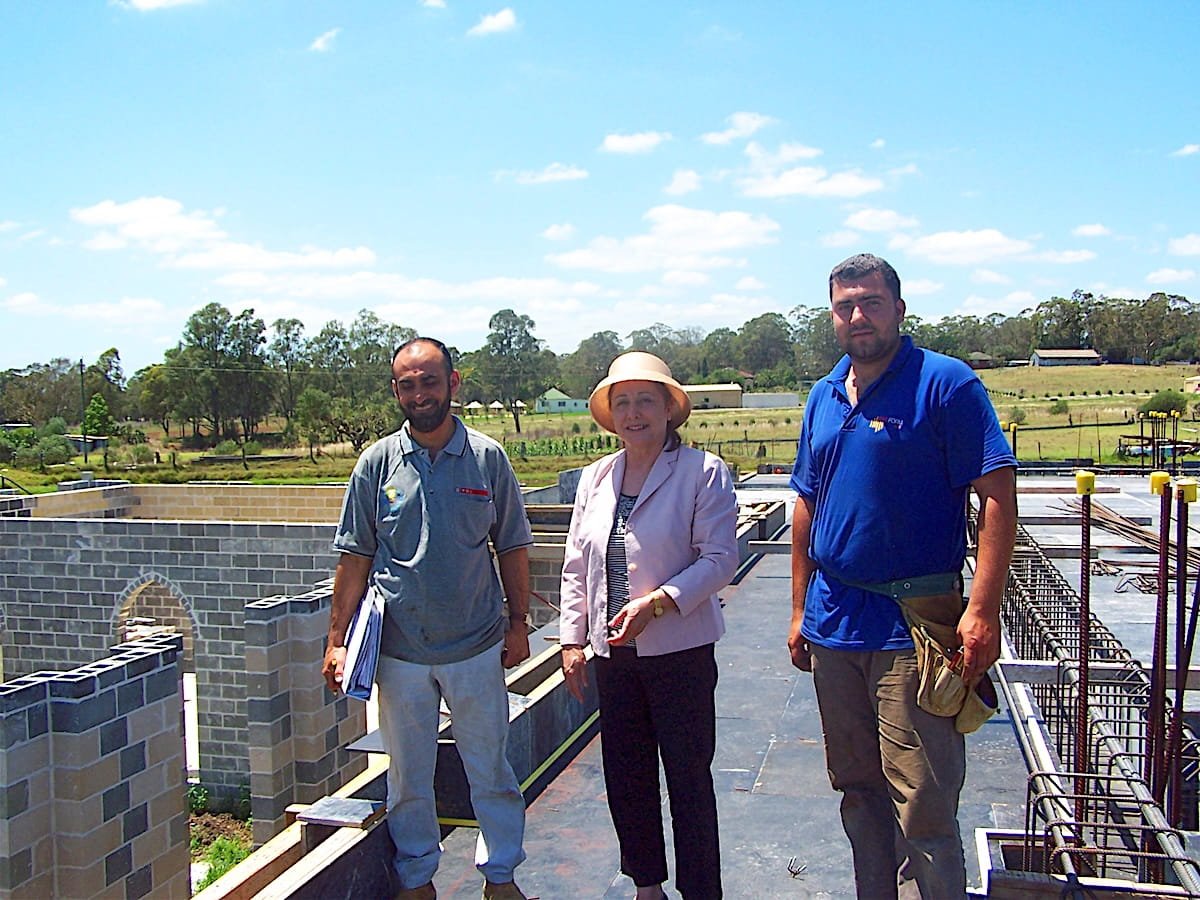
The Australian Islamic House under construction, photographed on 1 January 2003 during a site visit by architect Leyla Baydar Guven with the site manager and builder.

The Australian Islamic House under construction, photographed on 20 February 2003 during a site visit by architect Leyla Baydar Guven with structural engineer Majed Hawat and the builders.
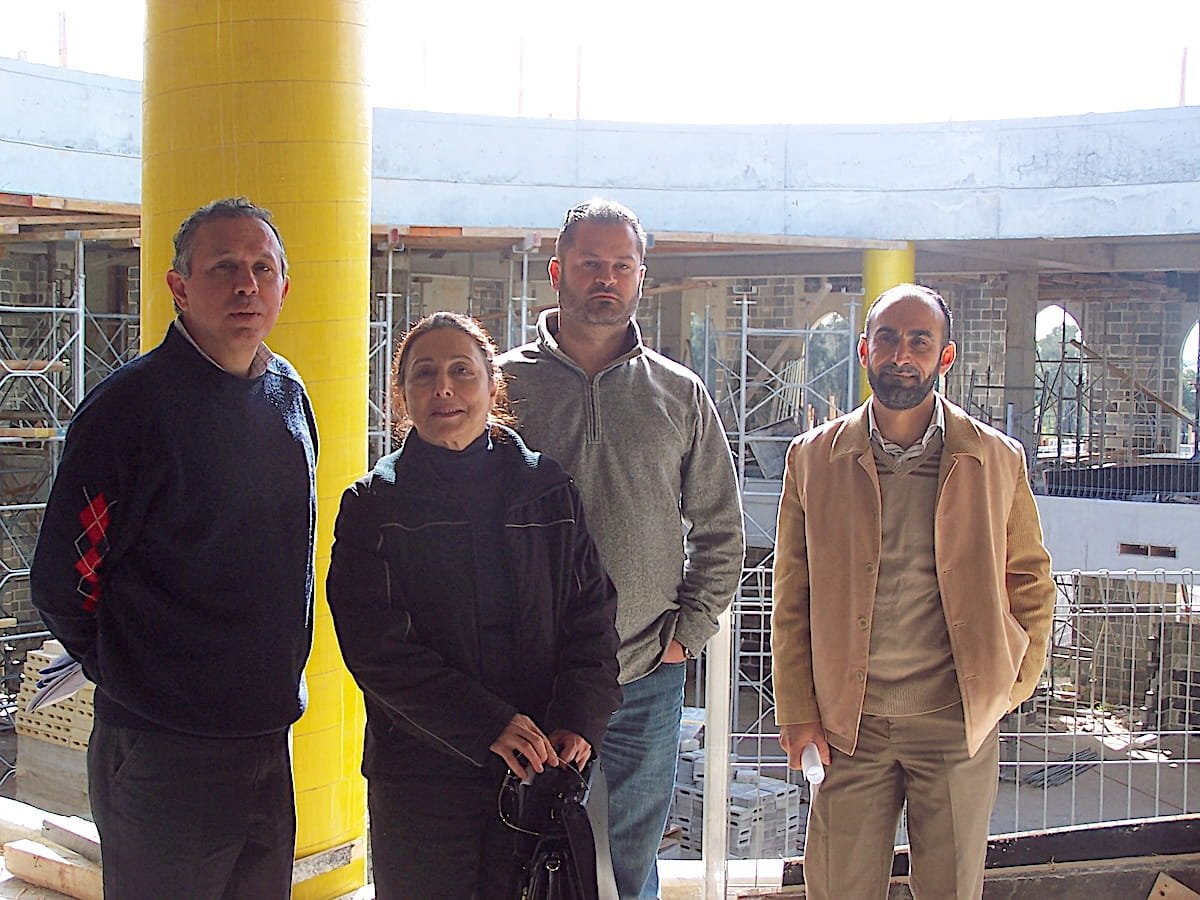
The Australian Islamic House under construction, photographed on 24 July 2010 during a site visit by architect Leyla Baydar Guven with structural engineer Majed Hawat, site managers, and builders.
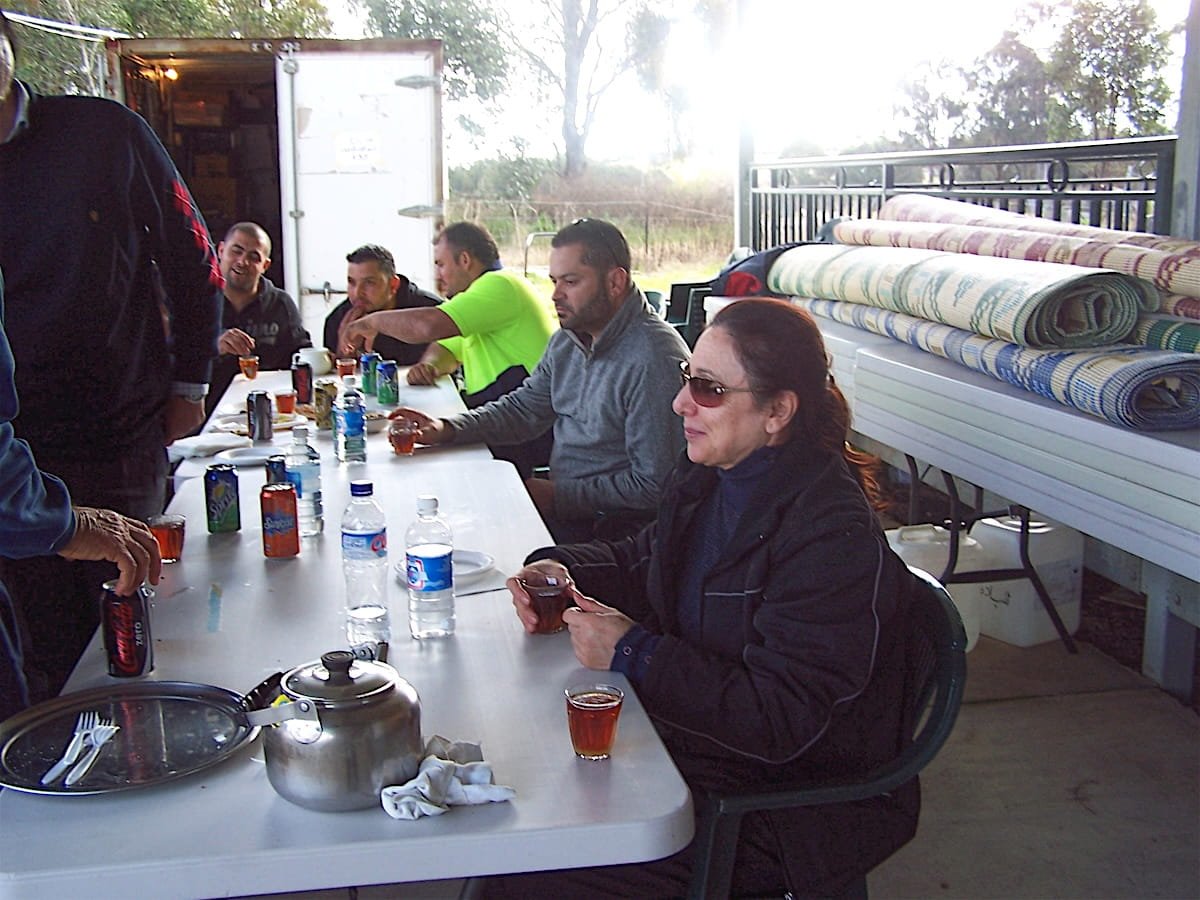
Architect Leyla Baydar Guven during a lunch break with the Australian Islamic House Management Committee and builders, photographed on 24 July 2010.
Taken together, these moments suggest that the project was not simply handed over once construction began. It continued to develop through on-site review, technical consultation, and sustained collaboration between architect, engineer, site managers, builders, and committee members. Construction, in this sense, remained part of the architectural process itself.
Refinement Through Later Modifications
A further modification application was submitted to Council on 5 July 2011 and approved on 12 December 2012. These refinements included:
- the construction of two 17.6 metre minarets attached to the mosque, contributing to a more symmetrical and balanced composition
- the addition of two skylights above the main entrance area
- the construction of a 6.2 metre high enclosure to the approved courtyard area, including a remote-controlled opening roof system
- the construction of a dome-shaped roof and feature columns for the approved fountain located to the south-east of the mosque
These additions matter because they show that the project’s architectural character was shaped through continued adjustment rather than fixed once and for all at the earliest stage. Balance, light, enclosure, and ceremonial emphasis remained active concerns throughout the development of the building.
Entry, Presence, and Public Identity
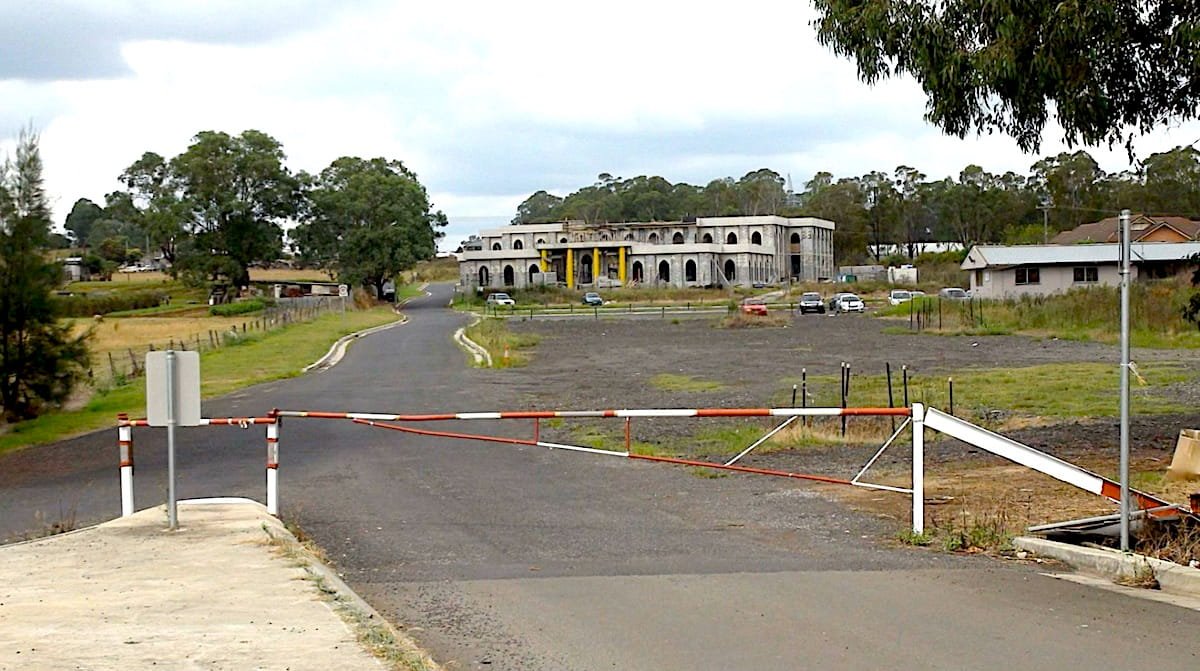
- An entrance view dated 17 March 2011 shows the building under construction while already legible as a public destination within its wider landscape.
- Even before completion, the project had begun to acquire the presence of a civic and spiritual landmark rather than merely that of a construction site.
- This is significant because it suggests that the architecture was conceived not only from within, but also through its approach, visibility, and relationship to the site.
Toward a Larger Complex
- The first stage, the mosque building itself, was completed and opened to the public on Friday, 28 February 2025.
- The wider approved vision, however, extends beyond the completed first phase.
- The second and third stages, comprising the meeting hall and classrooms, remain integral to the larger scheme.
- The mosque is conceived as part of a kulliye, a broader social complex that includes spaces for community gathering, social activity, and public welfare.
The project will be completed through the second and third stages of the approved application. This broader ambition gives the design and construction processes a deeper architectural meaning. The Australian Islamic House is not presented as an isolated object, but as part of an evolving architectural and social whole. Worship, gathering, education, and community life are understood from the beginning as parts of the same larger framework.
Construction as Continuity of Design
Taken together, the commissioning history, staged approvals, site documentation, later modifications, and opening of the first completed phase reveal a project defined by continuity. The Australian Islamic House emerged through a sustained effort to carry architectural intent into lasting built form. What the process makes clear is that the building was shaped not only by an initial concept, but by long-term discipline, close oversight, and a continuing commitment to the integrity of the design.
The architectural reading continues below with the building’s approach, entry sequence, and public presence.
Main Article
Australian Islamic House: A Contemporary Mosque
This article presents the Australian Islamic House as a contemporary mosque shaped by architectural clarity, spiritual purpose, and strong design authorship. For a deeper understanding of the project’s architectural meaning and authorship, read the main essay.