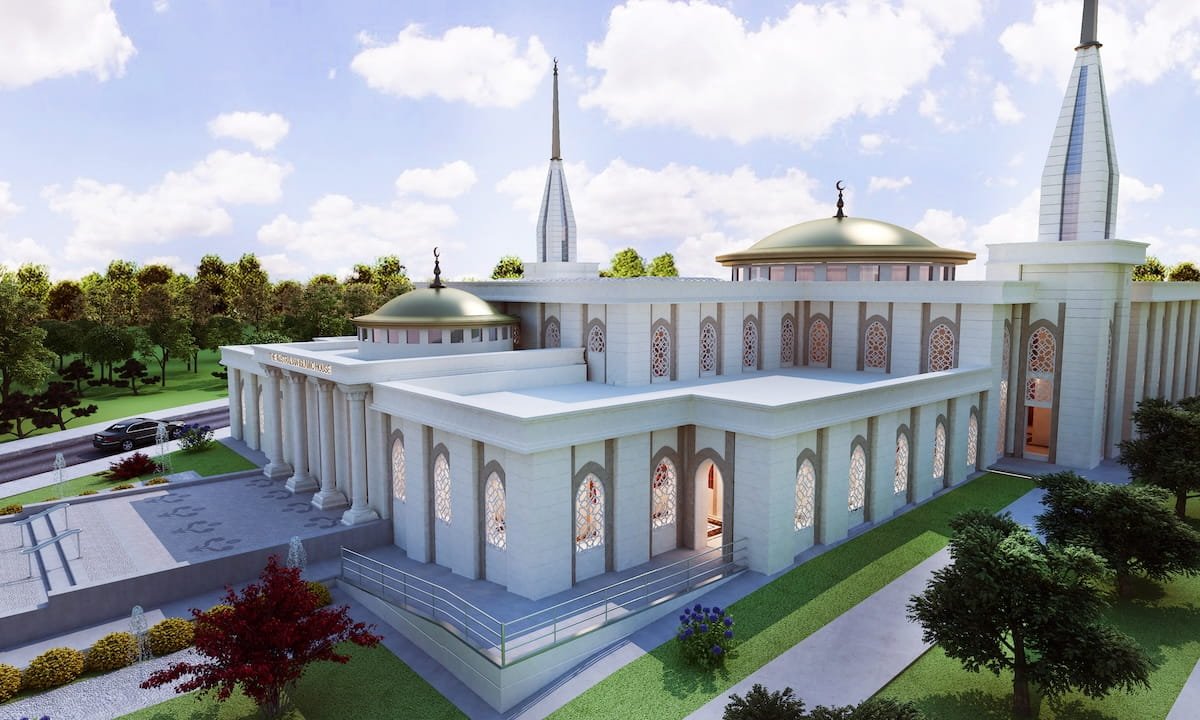
This account explores how the Australian Islamic House brings together symbolic continuity, contemporary reinterpretation, and practical inclusion through a carefully controlled group of architectural elements. The Small Dome, the Main Dome, and the Disable Ramp may appear to address different concerns, yet together they show how the building moves from image to use, and from formal presence to lived experience.
The domes shape the mosque’s visual and spiritual identity, while the ramp ensures that access to prayer and ablution is treated as a fundamental part of the architectural whole. This is an account of transition in more than one sense: transition from secular space to sacred space, from traditional form to contemporary construction, and from symbolic composition to inclusive public use.
Main Dome
The Main Dome continues this act of reinterpretation at a larger scale. The design reconceptualizes the traditional dome form by reducing its height and size and simplifying its geometry in order to create more intimate, community-focused spaces. This is an important architectural decision. It suggests that monumentality here is not pursued through excess, but through proportion, clarity, and collective usability. The dome remains symbolically powerful, yet its form has been moderated to support a closer and more grounded spatial experience.
Its construction also reflects a contemporary understanding of performance and durability. The use of steel and concrete strengthens structural efficiency and long-term resilience, while the innovative design approach seeks to minimize the carbon footprint without compromising structural integrity. In this sense, the dome is not only a symbolic form. It is also a carefully engineered architectural component that balances modern aesthetics with traditional symbolic features. The rendering on page 1 reinforces this reading by showing the central dome as the visual anchor of the composition, while the smaller entry dome supports it as part of a coordinated hierarchy.
The treatment of the dome windows is especially telling. Reinterpreting traditional dome windows involved replacing complex arched structures with streamlined square shape windows, and replacing traditional stained glass with plain, minimalist glass for enhanced transparency. Some strategically selected dome windows are equipped with remote-controlled technology to optimize natural light, enhance ventilation, and improve energy efficiency, particularly in hard-to-reach areas. The result is a design language that merges clean lines, minimalist form, and modern aesthetics with functional automation.
Traditional mosque dome windows more often feature arched designs, combining intricate mashrabiya (window screen) with stained glass to manage light, ventilation, and privacy. That contrast is important. It shows that the design does not reject tradition, but rather reframes it through contemporary means, preserving its environmental intelligence while simplifying its expression.
Small Dome
The small entry dome forms part of the riwaq (entry arcade) and has been designed to reflect the aesthetic, structural, and symbolic elements of the larger central dome. Its role is not secondary or decorative. Instead, it creates a harmonious, cascading effect that helps articulate the movement from the secular to the sacred space. This transition matters architecturally because it gives the point of entry both visual presence and ceremonial meaning. The smaller dome does not compete with the main dome. It prepares for it, introducing a rhythm of approach that makes arrival feel gradual and deliberate.
The architect reinterprets the traditional entry dome through a distinctly restrained language. Minimalism is embraced not as absence, but as control. Traditional elements such as stone mashrabiya are simplified so that the relationship between the smaller dome and the large central dome remains harmonious rather than overloaded. At the same time, modern materials such as natural stone and contemporary structural methods are incorporated into the composition. This gives the entry dome a double character. It remains recognizably rooted in mosque architecture, yet it speaks in a cleaner and more contemporary architectural register.
Disable Ramp
The Disable Ramp introduces another essential dimension of the project: accessibility as part of architectural dignity. Two dedicated disabled parking spaces are positioned close to the main entry and connected by an accessible, compliant ramp. This allows easy step-free access to the praying hall and the ablution area. The placement of these spaces along the shortest accessible route to the building entrance is a significant decision. It shows that accessibility has been treated not as an afterthought, but as part of the building’s primary logic of approach.
Architecturally, this matters because it brings inclusion into the visible order of the building. The ramp is not concealed or detached from the main composition. It is part of the formal approach, working together with the steps and forecourt. This creates a more dignified relationship between movement, entry, and use. Users with reduced mobility are not directed to a lesser route. They are received within the same architectural framework that defines the mosque’s public face. Such design strengthens the building not only functionally, but ethically and civically as well.
Where Symbolic Form Meets Inclusive Use
Taken together, the small dome, the main dome, and the accessible ramp reveal a project that understands architectural meaning as something both seen and experienced. The domes shape the mosque’s symbolic presence, its hierarchy of approach, and its relationship to tradition. The ramp ensures that this presence remains open and usable in practice. One speaks through form, the other through access, yet both belong to the same architectural thought. This shows that the Australian Islamic House is not built around isolated features, but around relationships: between small and large, threshold and gathering, image and use, spiritual symbolism and public care.
The architectural reading continues below with the next article, which turns inward to the transition courtyard and the interior architecture of preparation, where movement, light, and threshold are carefully shaped on the way toward prayer.
Previous Article
Entry Portal, Minarets, Parking and the Architectural Approach
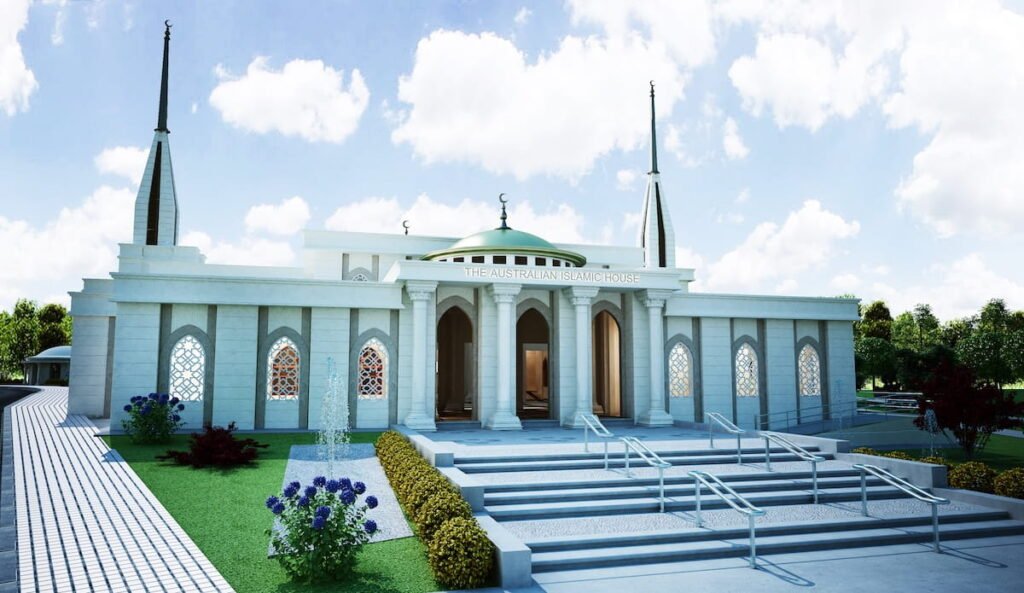
This article explores how the Australian Islamic House shapes its public architectural identity through the entry portal, minarets, and wider site arrangement. To explore this architecture of arrival in greater depth, continue to the detailed reading.
Next Article
Transition Courtyard and the Interior Architecture Designed for Preparation
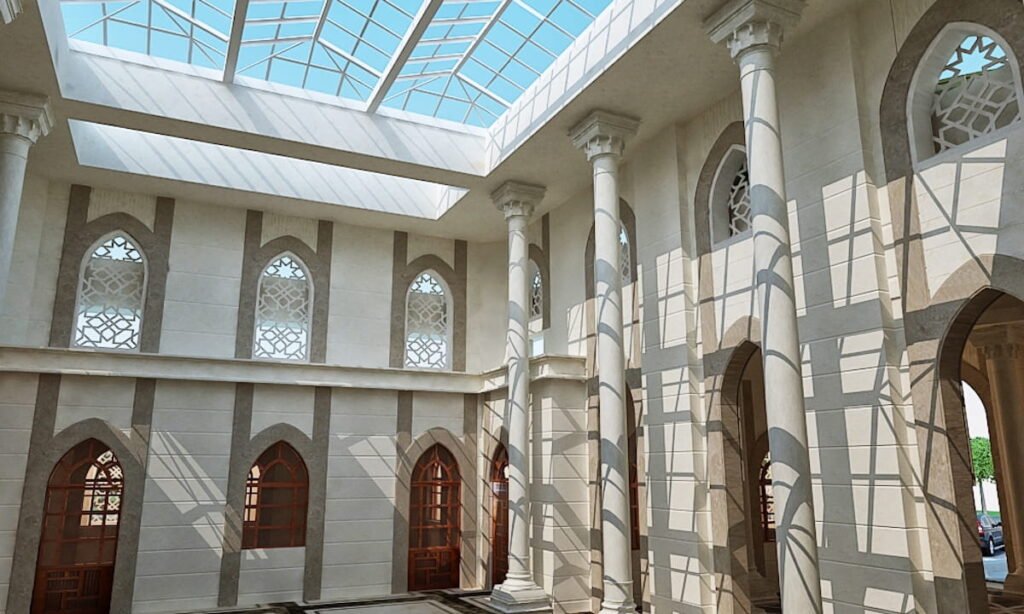
This article explores the quieter interior architecture of the Australian Islamic House, focusing on the spaces that prepare movement and shape the transition toward prayer. To follow this interior sequence more closely, read the full reading.