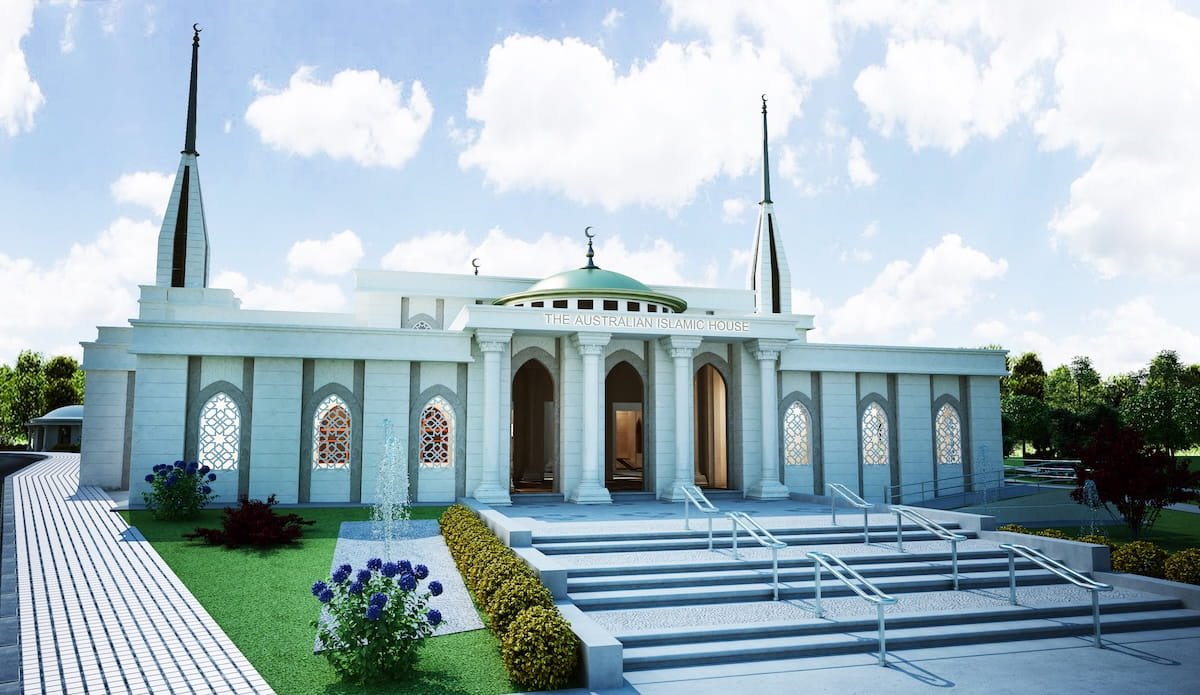
The exterior of the Australian Islamic House brings together symbolism, structure, and public approach with unusual clarity. Its architectural identity is shaped not by a single element, but by the careful relationship between the Minarets, the Main Entry & Gallery (riwaq), and the broader Site Arrangement and Parking. Together, these elements define how the mosque is seen, approached, and entered. They also show how architectural form can carry spiritual presence, civic order, and everyday usability at the same time.
Main Entry & Gallery (Riwaq)
The main entry of the mosque is defined by arched entry doorways and four traditional columns lined up in front of the front wall. This arrangement creates a deliberate balance between the exterior presence of the building and its interior architectural order. The entrance is monumental without becoming excessive. It gives the front of the mosque dignity, rhythm, and a strong sense of ceremonial arrival.
This monumental arched entrance leads to a portico (rewaq) with a small dome supported by eight columns, designed to balance the main dome. The relationship between the smaller dome and the larger central dome is important because it gives the entry composition visual harmony and reinforces the idea that the front approach belongs fully to the architectural language of the mosque. The entry does not function as an attachment. It is part of the building’s main formal and symbolic order.
The portico acts as a transitional, sheltered, and organizing space for worshippers entering the courtyard (Sahn) and the main prayer hall. It softens the threshold between the open exterior and the sacred interior, making arrival a gradual architectural experience rather than an abrupt point of access. This gives movement a measured rhythm and turns entry into an important part of the building’s spatial character.
The gallery acts as a central hub, allowing a natural separation of visitors toward specific areas of the building. Through its arcades, it effectively separates people moving into distinct western or eastern corridors (walkways). In this way, the entry sequence performs several roles at once. It is aesthetic, symbolic, structural, and organizational. It acts as a gateway while also visually assisting in supporting the larger central dome. The result is an entrance architecture that orders movement without losing composure or presence.
Minarets
Two minarets rise from the east and west facades with the same stone cladding as the main building, creating visual cohesion and a strong sense of architectural unity. Their placement establishes a symmetrical, aesthetic, and structural conformity in which the minarets are fully integrated with the main building rather than treated as detached vertical markers. This integration is one of the most important aspects of the facade, giving the mosque a composed silhouette and a balanced front elevation.
Their form moves from a square base to a pyramidal kullah (spire) and concludes with a long metal alem (finial). This progression carries forward a recognizable traditional vocabulary while also expressing a contemporary sensibility. It represents a profound fusion of traditional architectural styles and modern sustainability principles, allowing the minarets to participate in both heritage and present-day design thinking.
Minarets remain a very important feature of mosque architecture. Here, they help balance the dome mass, bring completion to the building, and answer the spiritual demands of the community. Traditionally, minarets were tall, slender towers attached to mosques, specifically designed for the muezzin to ascend and perform the adhan (call to prayer) five times daily. In contemporary mosque design, that role has shifted. Technological advancement and urban development have moved the minaret from a primarily functional element toward one that is also strongly symbolic, cultural, and aesthetic.
The internal stairwells of the minarets serve to reach the balconies, or galleries, while also providing essential structural stability. Their presence helps strengthen these tall elements against lateral forces. The minaret is therefore not simply an emblematic form. It is both a spatial and structural component of the mosque’s architecture.
Site Arrangement and Parking
The site arrangement reveals the larger ambition of the project. Spread across 2.877 hectares, or 28,770 square metres, the site is well suited to a large, multi-functional, and phased development. This makes it possible to integrate the mosque with educational facilities (classes) and a meeting hall, allowing the project to work not as a single building alone, but as a broader institutional environment shaped around worship, education, and communal gathering.
Car parking is divided into four stages. The first and second stages are positioned in front of the mosque, the third in front of the classes, and the fourth at the back of the lecture hall. This arrangement reflects a clear hierarchy within the site. Positioning the mosque with Stages 1 and 2 of the parking at the front allows easy access to the main worship areas and places them in the most accessible and visually prominent part of the development. The first two stages provide 123 + 92 car space, reinforcing the civic scale of the mosque’s public role.
Accessibility is treated as part of this larger order. The site includes 2 disable car park spaces and bike-rails for 6 bikes. Two dedicated disabled parking spaces are provided close to the main entry and are connected by an accessible, compliant ramp ensuring easy access. This decision matters architecturally as well as practically. It shows that approach, use, and dignity have been considered together. The public face of the mosque begins before the threshold itself, in the way the site receives worshippers, visitors, and everyday users.
A Composed Public Presence
Seen together, the minarets, the entry sequence, and the site arrangement give the Australian Islamic House a public presence shaped by balance, order, and clarity. The minarets establish vertical identity and symbolic completion. The main entry and riwaq create a measured architecture of threshold and movement. The site arrangement and parking structure extend that same logic into circulation, access, and phased growth. What emerges is a mosque whose exterior does more than present an image. It organizes approach, gives shape to arrival, and turns the experience of entry into part of the building’s architectural meaning.
The architectural reading continues below with the next article, which turns to the domes, the accessible ramp, and the architecture of arrival as the next key elements in the project’s unfolding design logic.
Main Article
Australian Islamic House: A Contemporary Mosque
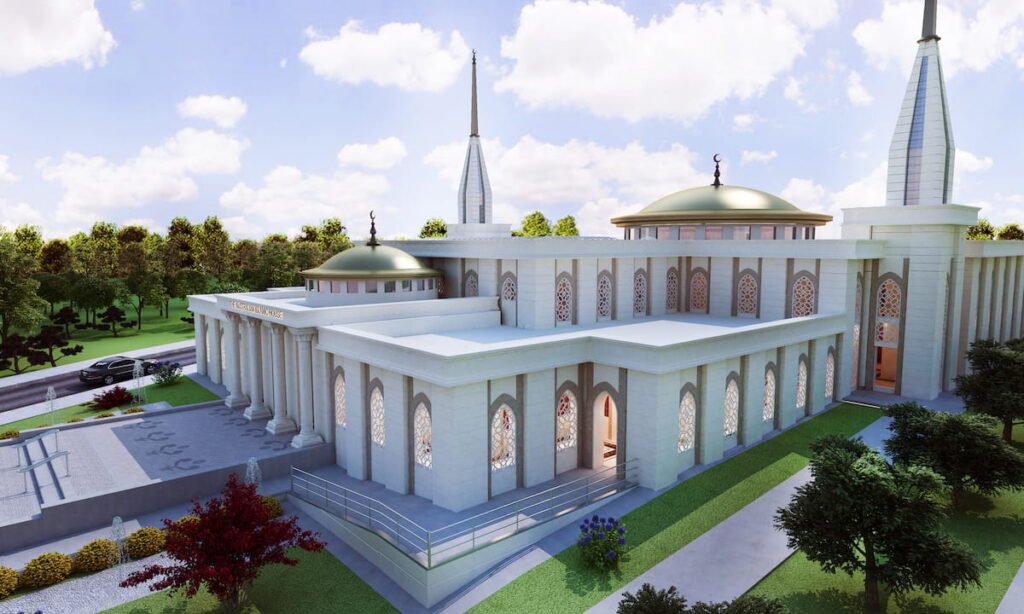
This article presents the Australian Islamic House as a contemporary mosque shaped by architectural clarity, spiritual purpose, and strong design authorship. For a deeper understanding of the project’s architectural meaning and authorship, read the main essay.
Next Article
Domes, Ramp, and the Architecture of Accessible Arrival
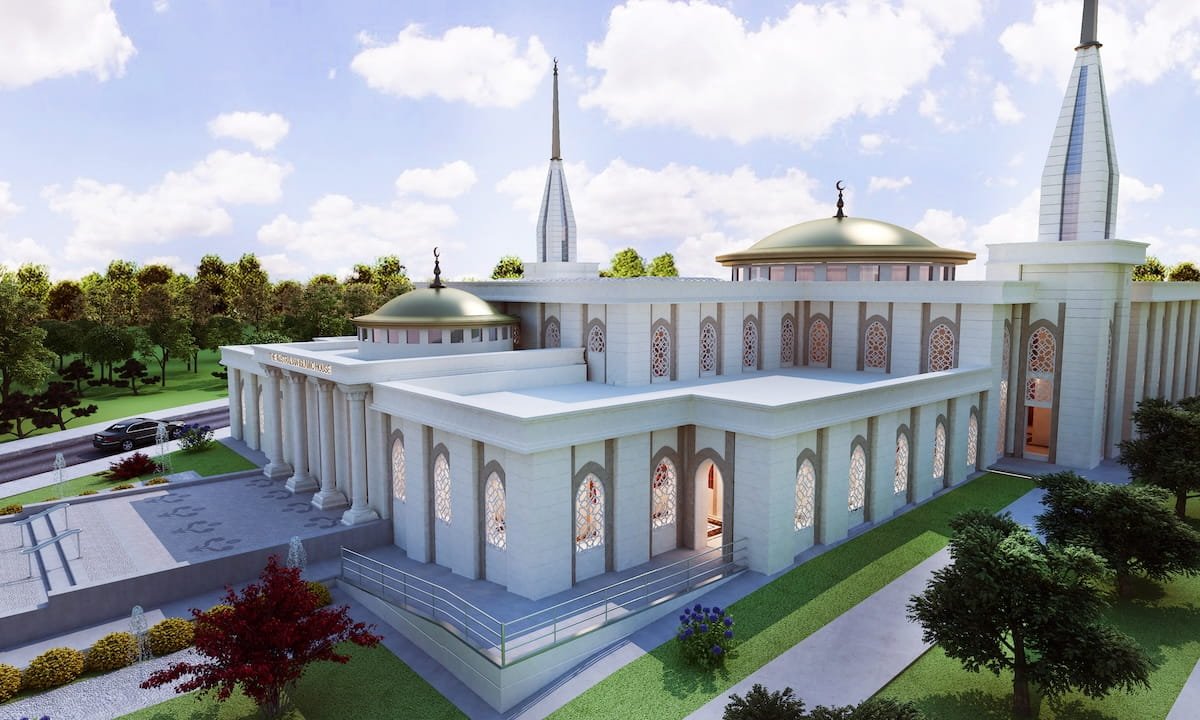
This article explores how the Australian Islamic House brings symbolic form, contemporary reinterpretation, and inclusive access into a single architectural composition. To see how symbolic form and inclusive access come together, explore the full text.